
Understanding Hernia in Women:
What are the signs of hernia in women?
Understanding Hernia in Women: What are the signs of hernia in women?

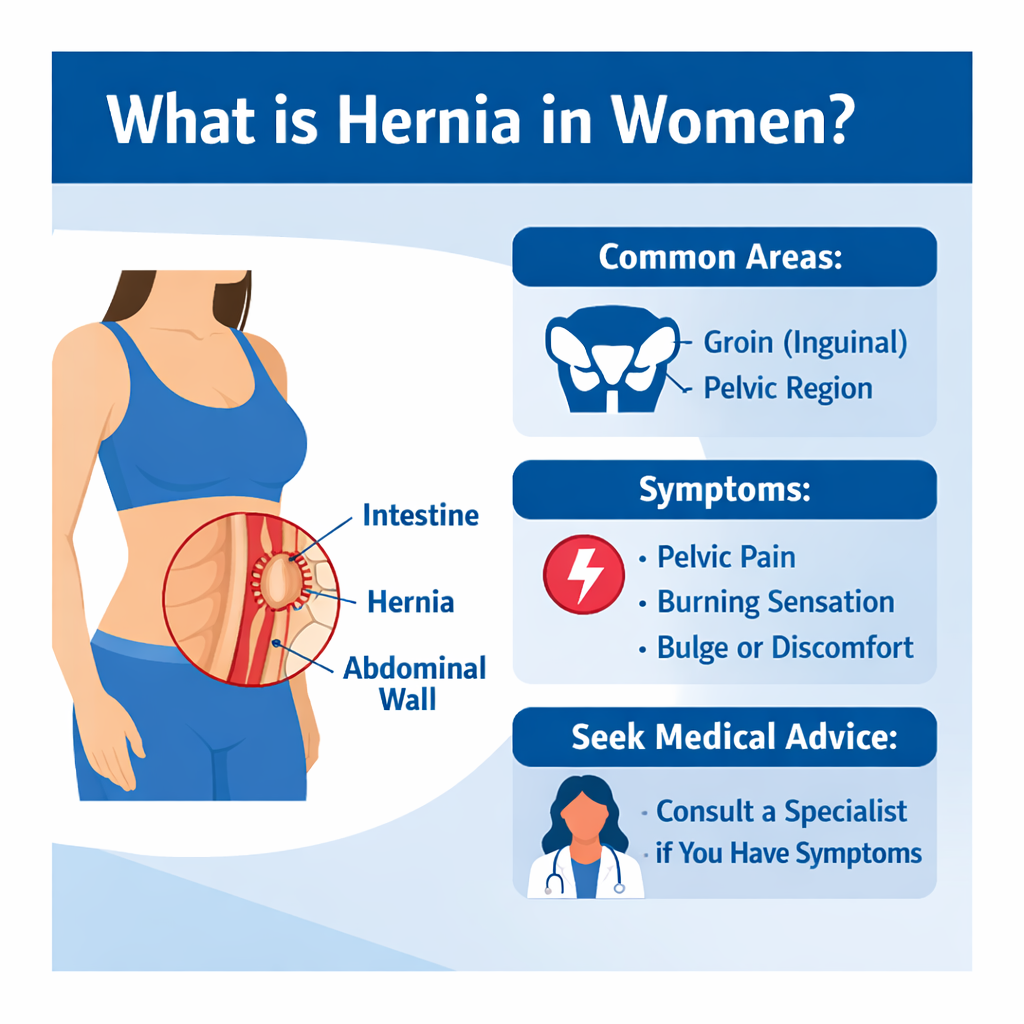
What is Hernia in Women?
Imagine a sweater snagged in a zipper teeth. Hernia, a medical condition, occurs like that.
A hernia is when a hole in the abdominal wall lets tissue or intestines push through and get trapped. Hernias can vary in severity and impact. Hernias are a common medical condition affecting both men and women.
While the occurrence of hernia in women, also referred to as female hernia, and men is almost equal, the types and locations of hernias can differ between men and women.
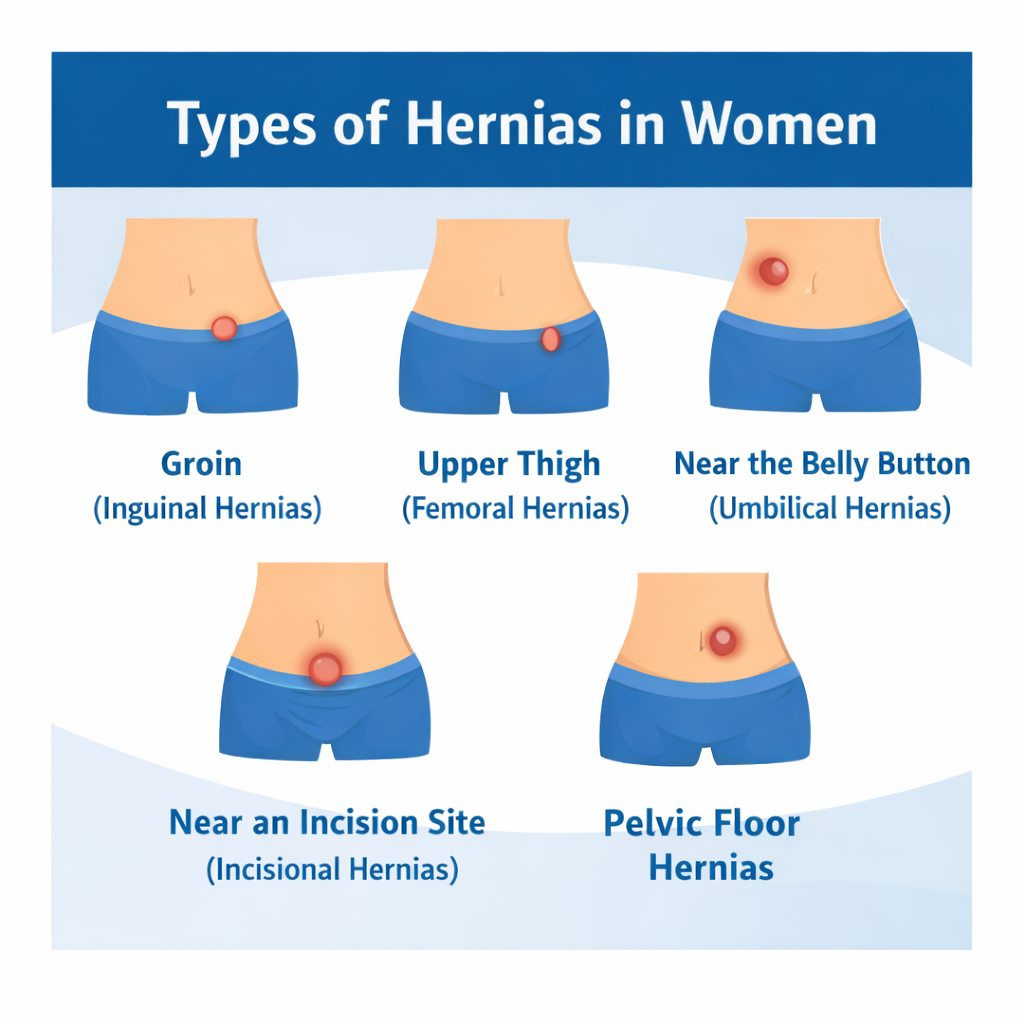
Types of Hernias Women Encounter
In men, hernias most frequently appear in the groin area, known as inguinal hernias. Women, however, may experience hernias in several different areas, including:
- Groin (Inguinal Hernias)
- Upper Thigh (Femoral Hernias)
- Near the Belly Button (Umbilical Hernias)
- Near an Incision Site (Incisional Hernias)
- Pelvic Floor Hernias
These variations mean that hernias in women may be more challenging to diagnose and treat effectively.
What causes hernia in women?
What causes hernia in women is often a combination of muscle weakness and increased strain on the abdominal wall. Hernias are primarily caused by a combination of muscle weakness and strain. Factors contributing to this include heavy lifting, chronic coughing or sneezing, obesity, and certain medical conditions affecting connective tissue strength. In women, additional factors such as pregnancy, childbirth, hormonal changes, constipation, and previous abdominal surgery can further increase pressure on weakened muscles. According to Dr. Nikolas Valsamidis, who has over 25 years of experience in advanced laparoscopic surgeries in Dubai, minimally invasive techniques allow for accurate diagnosis and effective treatment of hernias in women, even when symptoms are subtle or the condition is complex.
Symptoms of Hernia in Women
Hernias in women often present with more subtle hernia symptoms than in men. Unlike men, who may notice a visible bulge, women typically have smaller, deeper hernias that are less noticeable. Many patients ask, how do I check myself for a hernia?
Common symptoms of hernia in women include:
Sharp aching pain at the hernia site
A burning or pulling sensation
Discomfort or pain that worsens with activity
Because hernias in women frequently occur in the pelvic floor or groin, hernia in women symptoms are often mistaken for gynecological issues, which can delay diagnosis and treatment.
Diagnosing Hernias
The initial diagnosis of a hernia generally involves a physical exam. A doctor may ask the patient to move or change positions to better identify the hernia. If the hernia is not immediately visible, imaging tests like CT scan or ultrasound may be ordered. These tests help to confirm the presence of a hernia and assess its severity.
Treatment Options for Hernias in Women
Once diagnosed, hernias can be managed in several ways, depending on their severity and impact on the patient’s quality of life. If a hernia is not causing significant symptoms, it might be managed with simple home remedies and preventive measures. However, untreated hernias can lead to extreme discomfort, necessitating surgical intervention.
Laparoscopic Hernia Repair
Laparoscopic hernia repair is often preferred over open surgical repair for treating hernias in women. This minimally invasive technique offers several advantages, including reduced pain and scarring.
Laparoscopic hernia repair is a minimally invasive surgical procedure to fix hernias. Small incisions are made, and a laparoscope (a thin tube with a camera) is inserted to guide the surgery. In some cases, the hernia is repaired using mesh, which reinforces the weakened area. Laparoscopic hernia repair typically results in less pain, faster recovery, and smaller scars compared to traditional open surgery.
Preventing Hernias
While hernias cannot be entirely prevented, certain steps can help reduce the risk:
- Maintain a Healthy Weight: Excess abdominal fat may strain the abdomen muscles, making them more susceptible to hernias.
- Strengthen Core Muscles: Incorporating core exercises, such as Pilates or yoga, can help strengthen the abdominal wall. These activities will improve posture and reduce the risk of hernias and lower back pain.
- Avoid Heavy Lifting: Particularly during pregnancy, avoid lifting heavy items. If lifting is necessary, practice proper lifting techniques and seek assistance when possible.
- Seek Prompt Medical Attention: If you ever experience symptoms like groin or abdominal pain, swelling, or a bulge, consult a healthcare professional immediately to prevent complications.
Expert Hernia Care For Women in Dubai
While hernias are a common condition affecting both men and women, understanding the unique aspects of hernias in women is crucial for timely diagnosis and effective treatment.
If you suspect a hernia, seek medical advice promptly to avoid complications and ensure optimal care.
Book an appointment with Dr. Nikolas Valsamidis, your trusted hernia specialist in Dubai.
Don’t let a hernia limit your life—trust Dr. Nikolas for expert, compassionate care
FAQs
A hernia in women occurs when an internal organ or tissue pushes through a weak area in the muscle or connective tissue. In women, hernias are often smaller and deeper, which can make them harder to detect compared to men.
Hernias in women can occur in various locations, including the groin (inguinal hernias), upper thigh (femoral hernias), near the belly button (umbilical hernias), near incision sites (incisional hernias), and the pelvic floor. Each type has distinct characteristics and requires specific diagnostic and treatment approaches.
The symptoms of hernia in women are often subtle and may not always include a visible bulge. Many women experience discomfort rather than obvious swelling.
Hernias in women can be caused by muscle weakness combined with strain from pregnancy, childbirth, heavy lifting, chronic coughing, obesity, constipation, or previous abdominal surgery.
You should consult a specialist if hernia in women symptoms are persistent, worsening, or interfering with daily activities, even if no lump is visible. Early diagnosis helps prevent complications.
Diagnosis usually involves a physical examination and, in some cases, imaging tests such as ultrasound or MRI, especially when symptoms are subtle.
The cost of treating a hernia in women can vary depending on the type of hernia, severity of hernia in women symptoms, surgical technique (open or laparoscopic), hospital facility, and post-operative care required. During a consultation, Dr. Nikolas Valsamidis provides a personalised evaluation to explain the most suitable treatment approach and give a clear breakdown of the expected costs.


RYGB Surgery and the Blood-Brain Barrier: Why Alcohol Sensitivity Skyrockets Post-Op
For many patients, life after bariatric surgery brings significant health improvements, including weight loss, better blood sugar control, and reduced

Robotic liver tumour surgery in Dubai: The future of precision resection
Liver cancer and other liver tumors can present significant challenges for both patients and surgeons. Few organs in the human

Hiatal hernia exercises to avoid: safe and unsafe practices
Quick answer: What exercises should I avoid with a hiatal hernia? Exercising with a hiatal hernia can be tricky. Certain

The hiatal hernia diet: what to eat and what to avoid
Do you know what should you eat if you have a hiatal hernia? For those living with a hiatal hernia,