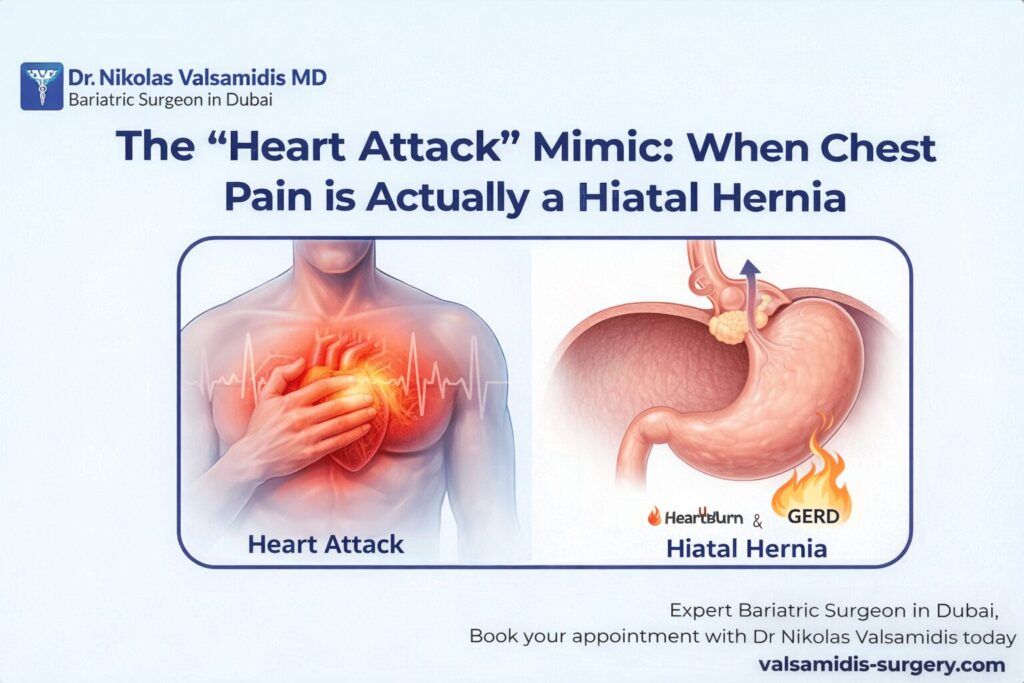
Chest pain is one of the most alarming symptoms a person can experience. For many, the first thought is a heart attack—and understandably so. But not all chest pain comes from the heart. In some cases, the real culprit is a Hiatal Hernia, a condition that can closely mimic cardiac symptoms and cause unnecessary panic.
Understanding the difference between heart-related pain and discomfort caused by a Hiatal Hernia can help you respond appropriately and avoid fear-driven assumptions.
What Is a Hiatal Hernia?
A Hiatal Hernia occurs when a part of the stomach pushes up through the diaphragm into the chest cavity. The diaphragm normally separates the chest from the abdomen, but when this opening weakens, it allows the stomach to move upward.
To understand what causes a hiatal hernia, it’s important to look at contributing factors. These include aging, obesity, heavy lifting, chronic coughing, or even frequent straining. In many cases, people may not even realize they have a Hiatal Hernia until symptoms begin to appear.
Why It Feels Like a Heart Attack
One of the biggest concerns with a Hiatal Hernia is how similar its symptoms can feel to a heart issue. The hiatal hernia chest pain location is often in the center of the chest, right behind the breastbone. This is the same area where heart-related pain is typically felt.
Because of this overlap, people often mistake Hiatal Hernia pain for something more serious. The discomfort may include burning sensations, pressure, or tightness, especially after eating or lying down.
Understanding the hiatal hernia chest pain location is key to distinguishing it from cardiac pain, although medical evaluation is always recommended for any chest discomfort.
Common Symptoms to Watch For
While chest pain is the most noticeable symptom, a Hiatal Hernia can present in several other ways:
- Acid reflux or heartburn
- Difficulty swallowing
- A feeling of fullness after small meals
- Regurgitation of food or sour liquid
These symptoms often worsen after eating or when bending over. Recognizing these patterns can help identify whether the issue is related to a Hiatal Hernia rather than the heart.
What Causes a Hiatal Hernia?
If you’re wondering what causes a hiatal hernia, the answer often lies in pressure and muscle weakness. Over time, the diaphragm can weaken, allowing the stomach to push through.
Factors that explain what causes a hiatal hernia include:
- Increased abdominal pressure from obesity
- Pregnancy
- Heavy lifting or straining
- Persistent coughing or vomiting
Understanding what causes a hiatal hernia can help you take preventive steps and reduce the risk of worsening symptoms.

How to Relieve Chest Pain from Hiatal Hernia
One of the most common concerns is how to relieve chest pain from hiatal hernia. The good news is that there are several effective ways to manage the discomfort.
First, lifestyle changes can make a big difference. Eating smaller meals, avoiding spicy or fatty foods, and not lying down immediately after eating can help. These simple adjustments are often the first step in learning how to relieve chest pain from hiatal hernia.
Elevating your head while sleeping and maintaining a healthy weight are also helpful strategies. For many people, these changes significantly reduce symptoms.
If you’re still unsure how to relieve chest pain from hiatal hernia, consulting a doctor can provide personalized guidance and treatment options.
Treatment Options
When it comes to hiatal hernia treatment, the approach depends on the severity of the condition.
For mild cases, lifestyle changes and medications to reduce stomach acid are usually enough. These are the most common forms of hiatal hernia treatment and can effectively control symptoms.
In more severe cases, where symptoms persist despite medication, surgery may be recommended. Surgical hiatal hernia treatment involves repositioning the stomach and tightening the diaphragm opening.
Most people, however, find relief without needing surgery, especially when they address the root causes and follow proper care routines.
When to Seek Medical Help
Even though a Hiatal Hernia can mimic a heart attack, it’s important not to self-diagnose. If you experience sudden or severe chest pain, always seek immediate medical attention.
Once heart-related issues are ruled out, doctors can evaluate whether the pain is due to a Hiatal Hernia. Understanding the hiatal hernia chest pain location and associated symptoms helps in making an accurate diagnosis.
Consult Dr. Nikolas Valsamidis for expert care
Chest pain is never something to ignore, but it’s not always a sign of a heart attack. A Hiatal Hernia can create symptoms that feel just as intense and frightening.
By understanding what causes a hiatal hernia, recognizing the hiatal hernia chest pain location, and learning how to relieve chest pain from hiatal hernia, you can approach the situation with more clarity and less fear.
Don’t let it interfere with your daily life. Dr. Nikolas Valsamidis offers expert, personalized care using the most effective GERD treatment options.
Take control of your digestive health today. Book an appointment with Dr. Valsamidis and start your journey to lasting relief!
FAQs
Yes, certain types like a hiatal hernia can sometimes mimic heart attack symptoms. They may cause chest pain, pressure, or discomfort that feels similar. However, a heart attack (myocardial infarction) is a medical emergency, so any sudden chest pain should be evaluated immediately.
Yes, a hiatal hernia can cause chest pain or discomfort. This often happens due to acid reflux or irritation of the esophagus, which can create a burning or pressure-like sensation in the chest.
Yes, symptoms of a hiatal hernia can sometimes resemble angina, especially because both can cause chest tightness or discomfort. The key difference is that angina is related to reduced blood flow to the heart, while hernia-related pain is usually linked to digestion or acid reflux.
Yes, in some cases it can feel similar, with symptoms like chest pain, pressure, or discomfort. However, heart attack symptoms often include additional signs like shortness of breath, sweating, nausea, or pain radiating to the arm or jaw, which require urgent medical attention.

The Invisible Deficiency: Why Autoimmune Gastritis is Often Mistaken for Simple Fatigue
We all have days when we feel drained, low energy, heavy limbs, and a foggy mind. It’s easy to blame

The “Heart Attack” Mimic: When Chest Pain is Actually a Hiatal Hernia
Chest pain is one of the most alarming symptoms a person can experience. For many, the first thought is a

Beyond PPIs: The Cost-Effectiveness of Fundoplication Surgery in 2026
Beyond PPIs: The Cost-Effectiveness of Fundoplication Surgery in 2026 However, for millions of people suffering from chronic acid reflux, medications

Nissen vs. Toupet: Choosing the Right Fundoplication Surgery for Your Digestive Health
Nissen vs. Toupet: Choosing the Right Fundoplication Surgery for Your Digestive Health Living with chronic acid reflux can be exhausting.