
What is a sports hernia? Causes, symptoms & treatment options
What is a sports hernia? Causes, symptoms & treatment options

A sports hernia—also known as athletic pubalgia—is a painful soft tissue injury in the lower abdomen or groin area, commonly affecting athletes involved in high-intensity sports.
Despite its name, it’s not a traditional hernia, but it can significantly impact movement, performance, and quality of life if left untreated.
If you’ve been experiencing ongoing groin pain during physical activity, especially twisting or sudden directional movements, understanding this condition is key.
In this blog, we’ll explain what a sports hernia is, what causes it, the key symptoms to watch for, and the most effective treatment options—from conservative care to surgical intervention.
What is a sports hernia (athletic pubalgia)?
A sports hernia is a painful injury involving a strain or tear of soft tissues—such as muscles, tendons, or ligaments—in the lower abdomen or groin. It commonly occurs during activities that involve sudden twisting or rapid directional changes.
While a sports hernia can sometimes progress to an inguinal hernia, they are not the same.
- Inguinal hernia, the most common groin hernia type, involves abdominal tissue, like the intestine, pushing through the lower abdominal wall, often forming a visible, painful bulge.
- Sports hernia is a tear or strain of any soft tissue in the lower abdominal or groin area.
Because multiple tissues may be affected and a traditional hernia may not be present, healthcare professionals often refer to this condition as athletic pubalgia. However, the term “sports hernia” remains widely recognized by patients and the public.
What causes sports hernia?
A sports hernia occurs when the deep tissues of the lower abdominal wall or the tendons attaching muscles to your pelvis weaken or tear.
The following situations can contribute to a sports hernia:
- Repetitive and forceful hip movements such as twisting, kicking, jumping, or abrupt directional changes
- Overexertion during unsafe or poorly performed abdominal and hip exercises
- Weak abdominal muscles and a lack of proper sports conditioning
- Muscle imbalances between the hips and the abdominal region.
Where do sports hernias occur on the body?
Damage to the soft tissues in the lower abdomen or groin is central to a sports hernia. The specific soft tissues commonly affected include:
- Oblique muscles in the lower abdomen.
- Tendons attach the oblique muscles to the pubic bone (part of your pelvis).
- Tendons connect the thigh (adductor) muscles to the pubic bone.
What are sports hernia symptoms to watch for?
A sports hernia typically causes sharp, sudden groin pain at the moment of injury—often during intense twisting or pivoting motions. While the pain may ease with rest, it tends to return once sports activities are resumed, especially those involving rapid movements.
The following descriptions of the pain apply to a sports hernia:
- Sudden, sharp pain at the moment of injury
- Chronic, dull, or burning pain in the lower abdomen or groin
- Pain that’s hard to localize, often spreads across the lower abdomen or groin
- Radiating pain to the inner thigh or scrotum
- Pain during physical exertion, especially when sprinting, twisting, kicking, or sitting up
- Discomfort or pain when coughing or sneezing
- Pain that lessens with rest but returns during athletic activity
- Reduced physical ability, often leading to cutting back or stopping sports entirely
How is a sports hernia diagnosed?
Diagnosing a sports hernia can be challenging because groin pain can stem from various sources, including hip problems, pelvic fractures, or referred pain from nearby regions.
Here’s how sports hernia diagnosis typically works:
- Clinical evaluation: Your doctor will review your symptoms, medical history, and perform a physical exam. You may be asked to do movements like sit-ups or abdominal contractions to check for pain response.
- Imaging tests: To support the diagnosis or rule out any other conditions, tests like MRI, ultrasound, X-ray, CT scan, or bone scan may be recommended.
These tools help pinpoint soft tissue damage and differentiate it from other causes of groin pain.
What are the different options for sports hernia treatment?
Sports hernia treatment depends on the severity of the injury. Many cases improve with non-surgical approaches, while more persistent or severe cases may require surgery.
Sports hernia non-surgical treatment
- Rest and modified activity: Avoiding strenuous physical movements gives the torn or strained tissues time to heal and reduces inflammation.
- Anti-inflammatory medications: Medications like NSAIDs help reduce pain and swelling, making daily movement more comfortable.
- Ice therapy: Using ice packs on the affected area can ease inflammation and numb sharp pain during the initial stages.
- Physical therapy: A structured rehab program strengthens abdominal, core, and hip muscles to relieve stress on the injured area and prevent recurrence.
- Corticosteroid injections: If standard medications aren’t effective, a cortisone injection may be recommended to provide targeted inflammation relief.
- Gradual return to sport: With proper conditioning and guidance, athletes can safely return to activity without risking re-injury.
Sports hernia operation (Surgical treatment)
If conservative methods don’t provide relief within a few weeks, sports hernia surgery may be required to repair torn muscles or reinforce weakened tendons.
- Laparoscopic surgery: A minimally invasive technique that involves small incisions and the use of a tiny camera to guide specialized instruments. This method typically offers faster healing, less pain, and minimal scarring.
- Open surgery: Involves a larger incision to allow direct access to the affected area. This may be preferred for complex or revision cases where detailed repair is needed.
- Surgical rehabilitation: After surgery, a customized physical therapy plan is created to help restore strength, flexibility, and function—ensuring a safe and complete return to activity.
Consult Dr Nikolas Valsamidis for sports hernia treatment in Dubai
If you’re experiencing persistent groin pain or symptoms of a sports hernia, don’t delay expert care.
Dr. Nikolas Valsamidis, a leading hernia specialist Dubai, brings over 25 years of excellence in advanced laparoscopic and hernia surgeries. Known for his precision, patient-centered approach, and commitment to minimally invasive techniques, Dr. Nikolas can help you recover safely and return to full strength with confidence and comfort.
FAQs
A sports hernia (athletic pubalgia) is a tear or strain in the muscles or soft tissues of the lower abdomen or groin, without a visible bulge. In contrast, a traditional hernia occurs when abdominal contents push through a muscle gap, creating a noticeable bulge.
Hernia surgery involves repairing a weakness or tear in the abdominal wall through which internal tissues or organs may protrude. Depending on the type and severity of the hernia, it can be done via open or laparoscopic techniques.
Sports hernia causes are often linked to activities involving explosive, repetitive movements—especially those that twist or strain the pelvis and lower abdomen. Common sports that can cause sports hernias include ice hockey, soccer, rugby, football, wrestling, skiing, tennis, and hurdling.
A sports hernia typically does not heal on its own with rest alone. Most cases require active treatment, such as physical therapy, anti-inflammatory medications, or corticosteroid injections. In more severe cases, surgery may be necessary.
While sports hernias can be difficult to prevent fully, core strengthening, hip stability exercises, and flexibility training can reduce your risk.
Sports hernia surgery recovery time varies. Most patients resume light activity in 2–4 weeks and return to full sports within 6–12 weeks, depending on the procedure and rehab.
In most cases, sports hernia surgery scars are minimal, especially if performed laparoscopically. Open surgery may result in a small visible scar, but it’s typically placed low on the abdomen and fades over time.
A sports hernia involves soft tissue strain or tear without a visible bulge, while an inguinal hernia causes abdominal contents to push through the muscle wall, often forming a bulge. They are different conditions, but can sometimes occur together.
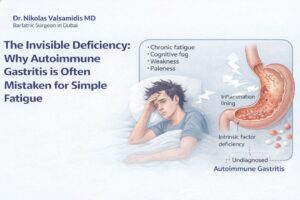

The Invisible Deficiency: Why Autoimmune Gastritis is Often Mistaken for Simple Fatigue
We all have days when we feel drained, low energy, heavy limbs, and a foggy mind. It’s easy to blame

The “Heart Attack” Mimic: When Chest Pain is Actually a Hiatal Hernia
Chest pain is one of the most alarming symptoms a person can experience. For many, the first thought is a

Beyond PPIs: The Cost-Effectiveness of Fundoplication Surgery in 2026
Beyond PPIs: The Cost-Effectiveness of Fundoplication Surgery in 2026 However, for millions of people suffering from chronic acid reflux, medications

Nissen vs. Toupet: Choosing the Right Fundoplication Surgery for Your Digestive Health
Nissen vs. Toupet: Choosing the Right Fundoplication Surgery for Your Digestive Health Living with chronic acid reflux can be exhausting.