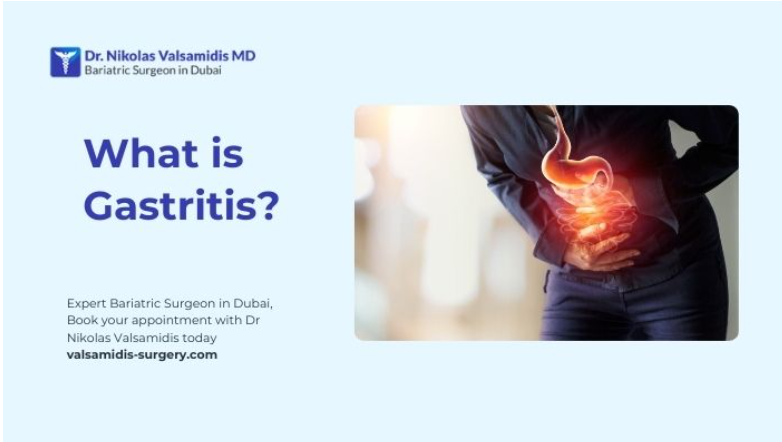
What is Gastritis?

1what is gastritis

As a surgical specialist focusing on digestive health, Dr. Nikolas Valsamidis frequently encounters gastritis in his practice.

It’s a term many patients hear, but few truly understand. It refers to a condition that affects millions and can range from a temporary, mild irritation to a chronic, severe problem that demands immediate attention.

So, what is gastritis? Simply put, it is the inflammation of the stomach lining. The word itself provides the definition: the prefix “gast” refers to the stomach, and the suffix “itis” denotes inflammation. 


Specifically, gastritis is an inflammation of the gastric or stomach mucosa, which is the protective inner lining of your stomach. When this lining is irritated or damaged, your body’s natural defense mechanisms are overwhelmed, leading to the discomfort and systemic issues we associate with this condition.

Understanding this core definition is the first step toward finding relief. Whether you are dealing with acute gastritis, a sudden, severe onset, or a persistent, nagging case of chronic gastritis, recognizing the root cause and the signs is essential.

What causes gastritis?

To treat gastritis effectively, it is essential to identify its underlying causes.

The underlying mechanisms often involve factors that either directly damage the stomach lining or compromise its protective layer, as the destructive processes outweigh the protective ones. The most frequent gastritis causes include:

  • Infection with H. pylori: Infection with the Helicobacter pylori bacteria is the most common cause globally. This bacterium inflames the stomach lining and often leads to a type of chronic gastritis that may even be asymptomatic initially.

  • Regular NSAID use: Certain medications, specifically Non-Steroidal Anti-Inflammatory Drugs (NSAIDs) like ibuprofen or aspirin, can lead to stomach inflammation if used for a long period.

  • Alcohol and smoking: Excessive alcohol consumption and smoking directly erode the gastric lining, breaking down the mucosal barrier and leading to inflammation.

  • Stress and bile reflux: Persistent, chronic gastroesophageal reflux disease (GERD) can lead to erosive gastritis. Additionally, extreme stress and trauma can compromise blood flow (ischemia) to the stomach, causing the lining to die.

  • Autoimmune attack: Autoimmune gastritis is a disease resulting from an inappropriate immune response against the stomach’s protective lining cells. This form often leads to nutrient deficiencies, which we will discuss later.

What does gastritis feel like? Common symptoms and signs

Gastritis symptoms can vary widely. Some patients with mild gastritis (like early H. pylori cases) may be completely asymptomatic. However, when symptoms do occur, they are often sudden in onset.

The core symptoms of gastric (Dyspepsia and pain)

The most defining signs of gastritis include:

Epigastric pain (Gastritis pain location): The hallmark of the condition is abdominal pain, specifically epigastric pain. This gastritis pain location is in the upper central area of the abdomen, right above the belly button. This pain may either improve or worsen after eating.

Dyspepsia: This is the medical term for indigestion, a persistent discomfort in the same epigastric area. Patients describe the symptoms of gastritis as a gnawing, burning sensation that is often mild in severity.

Fullness and bloating: Patients often report a sensation of abdominal fullness or bloating after eating, even small amounts.

What is Gastritis

Accompanying digestive symptoms

Other common stomach inflammation symptoms include:

  • Nausea and vomiting
  • Reduced or loss of appetite
  • Belching (more frequent burping)
  • Persistent hiccups (a rare but interesting sign, as stomach inflammation can trigger the hiccup reflex)

What about woman gastritis symptoms?

While the core symptoms are the same for all adults, some women’s gastritis symptoms may present differently.

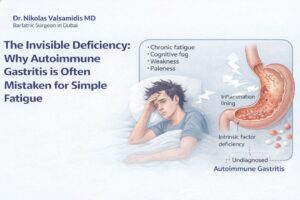
Women are statistically more likely to suffer from autoimmune gastritis and often present with symptoms related to the resulting iron and vitamin B12 deficiency (such as chronic fatigue and pallor) rather than severe, acute pain.

Severe gastritis symptoms and complications

When acute gastritis is severe or chronic gastritis symptoms are left untreated, serious complications can arise.

1. Bleeding and anemia:
Inflammation can lead to an erosion or ulceration in the stomach lining, causing internal bleeding. This can manifest in several ways:

  1. Vomiting blood (Hematemesis): This can appear as bright red blood or “coffee ground emesis,” which is partially digested blood.
  2. Bloody stool (Melena or Hematochezia): Melena is dark, black, tarry, and smelly stool (from slower, digested blood), while hematochezia is bright red blood (from a brisk, quick bleed).
  3. Anemia: Chronic, slow, or occult (unrecognized) bleeding can lead to iron deficiency anemia. Patients, especially those with autoimmune gastritis, may present with signs of anemia, like fatigue and paleness, even if they don’t notice the pain.

2. Physical blockage:

Severe inflammation can cause the tissues to swell (edema), leading to a serious complication known as gastric outlet obstruction. This swelling blocks the passage of food out of the stomach, causing:

  • Worsening nausea and vomiting.
  • Severe constipation.
  • Dehydration and acute kidney injury.

Any patient experiencing these severe gastritis symptoms requires immediate medical attention.

Gastritis, or stomach inflammation, is a clear signal that your body’s delicate digestive balance has been compromised.

Whether your issue stems from persistent H. pylori infection, medication use, or an autoimmune gastritis condition, accurate diagnosis is vital to prevent progression to severe complications. If you are experiencing persistent gastric pain symptoms or any of the signs detailed above, do not ignore them.

Ready to address your symptoms and find relief?

The journey to digestive health starts with expertise. Contact Dr. Nikolas Valsamidis today to arrange a private, confidential consultation, leading to the accurate diagnosis and specific treatment plan you need.

Dr. Nikolas Valsamidis, an experienced laparoscopic surgeon and GERD specialist in Dubai, is here to support you at every stage of that journey. With his advanced expertise and a personalized treatment approach, you can take confident steps toward a future free from the discomfort of GERD.

FAQs

Immediate relief often comes from avoiding the trigger (like NSAIDs or alcohol) and using over-the-counter antacids. However, to truly eliminate the gastritis pain, the underlying cause (like H. pylori) must be treated, which requires professional diagnosis and specific medication.

No, but they are related. It is the inflammation of the stomach lining. An ulcer is a deeper, open sore that forms when the inflammation (gastritis) erodes a hole completely through the protective lining. Untreated gastritis can lead to an ulcer.

The two most common gastritis causes are long-term use of NSAIDs (ibuprofen, aspirin) and infection with the H. pylori bacteria. Other causes include excessive alcohol intake and autoimmune diseases.

Acute gastritis is a sudden, short-term inflammation, often severe, that resolves quickly once the cause is removed. Chronic gastritis is a long-term inflammation that develops slowly and can persist for years if left untreated, often leading to more severe issues, such as nutrient deficiencies.

The primary gastritis pain location is in the epigastric area, the upper-center part of the abdomen, just below the breastbone and above the belly button.

Yes. While mild gastritis is common, severe gastritis can lead to internal bleeding, anemia, and, in rare cases, a gastric outlet obstruction (a blockage of the stomach exit) due to extreme swelling. These severe symptoms require urgent medical care.

Leave a Reply

Your email address will not be published. Required fields are marked *

Book An Appointment